
 Image 1 of 1
Get Into Location Sound Recording | 19th - 20th November 2026
Get Into Location Sound Recording
Introduction
Want to learn how professional sound is recorded on film and TV productions? Get Into Location Sound Recording is a practical, hands-on introduction to the essential skills and techniques used by location sound teams to capture clear, high-quality audio on set.
You'll explore professional sound recording equipment, microphone techniques, sound recording principles and the role of the location sound department. Through practical exercises, you'll learn how to work with microphones, mixers and recorders, position equipment effectively and capture sound in a range of production environments.
Whether you're completely new to sound or looking to develop your production skills, this course will give you an insight into what it's like to work as part of a film and TV location sound team, helping you understand the skills and knowledge needed to begin progressing towards a career in location sound.
Course Outline
During the course, you'll explore:
Introduction to location sound – understanding the role of sound in film and TV and the responsibilities of the location sound department.
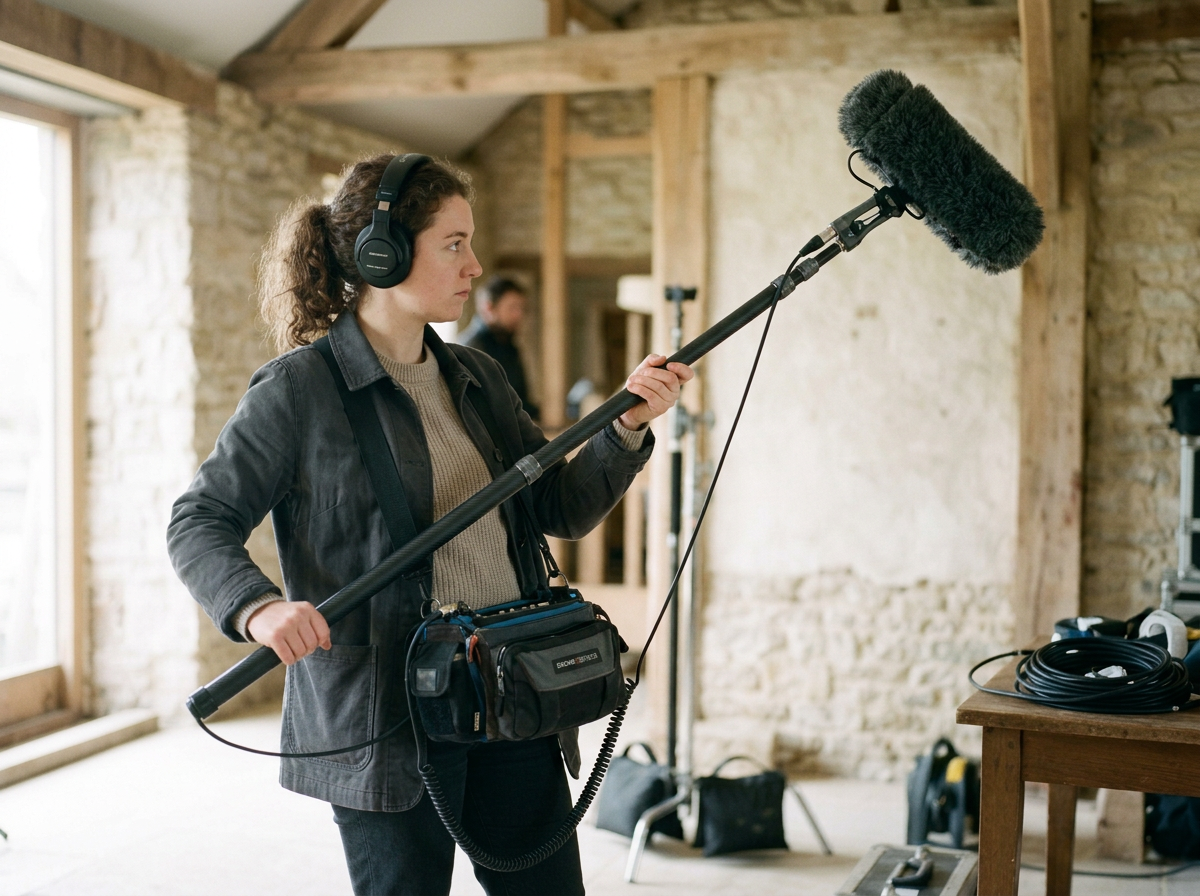
Sound recording equipment – getting hands-on with professional microphones, boom poles, mixers, recorders, radio microphones and essential accessories.
Microphones and microphone techniques – understanding different microphone types and when to use them, including boom and radio microphone techniques.
Boom operation – learning how to position and operate a boom microphone effectively while staying out of shot.
Radio microphones – exploring how to safely and effectively fit, position and operate wireless microphones.
Recording equipment and levels – learning the fundamentals of setting up a sound recorder and monitoring and managing audio levels.
Understanding sound quality – exploring common sound problems such as background noise, interference, distortion, handling noise and unwanted reflections.
Working with contributors and performers – understanding how to communicate professionally and respectfully when fitting microphones and recording people on camera.
Sound on location – exploring the challenges of recording clean audio in different environments and how to adapt your approach.
Working with the camera department – understanding how sound and camera teams work together to capture picture and sound effectively.
Sound reports and file management – gaining an introduction to good recording practices, audio file management and production documentation.
Health and safety – understanding safe working practices when using sound equipment and working on set.
Working as part of a production crew – developing an understanding of professional set etiquette, communication and teamwork.
Learning Outcomes
By the end of the course, you will be able to:
Understand the role and responsibilities of a location sound team in film and TV production.
Identify and safely handle essential professional sound recording equipment.
Select appropriate microphones for different recording situations.
Set up basic location sound recording equipment.
Apply fundamental boom microphone techniques.
Understand how to position and use radio microphones appropriately.
Set and monitor audio recording levels.
Identify common sound recording problems and understand how to reduce or avoid them.
Capture clear, usable dialogue and production sound in a range of locations.
Communicate professionally with contributors, performers and other members of a production crew.
Understand the relationship between the camera and sound departments.
Apply basic sound recording, file management and production documentation practices.
Understand safe and professional working practices on a film or TV set.
Identify potential entry-level roles and next steps towards a career in location sound recording.
No previous sound recording experience is required.
Get Into Location Sound Recording
Introduction
Want to learn how professional sound is recorded on film and TV productions? Get Into Location Sound Recording is a practical, hands-on introduction to the essential skills and techniques used by location sound teams to capture clear, high-quality audio on set.
You'll explore professional sound recording equipment, microphone techniques, sound recording principles and the role of the location sound department. Through practical exercises, you'll learn how to work with microphones, mixers and recorders, position equipment effectively and capture sound in a range of production environments.
Whether you're completely new to sound or looking to develop your production skills, this course will give you an insight into what it's like to work as part of a film and TV location sound team, helping you understand the skills and knowledge needed to begin progressing towards a career in location sound.
Course Outline
During the course, you'll explore:
Introduction to location sound – understanding the role of sound in film and TV and the responsibilities of the location sound department.
Sound recording equipment – getting hands-on with professional microphones, boom poles, mixers, recorders, radio microphones and essential accessories.
Microphones and microphone techniques – understanding different microphone types and when to use them, including boom and radio microphone techniques.
Boom operation – learning how to position and operate a boom microphone effectively while staying out of shot.
Radio microphones – exploring how to safely and effectively fit, position and operate wireless microphones.
Recording equipment and levels – learning the fundamentals of setting up a sound recorder and monitoring and managing audio levels.
Understanding sound quality – exploring common sound problems such as background noise, interference, distortion, handling noise and unwanted reflections.
Working with contributors and performers – understanding how to communicate professionally and respectfully when fitting microphones and recording people on camera.
Sound on location – exploring the challenges of recording clean audio in different environments and how to adapt your approach.
Working with the camera department – understanding how sound and camera teams work together to capture picture and sound effectively.
Sound reports and file management – gaining an introduction to good recording practices, audio file management and production documentation.
Health and safety – understanding safe working practices when using sound equipment and working on set.
Working as part of a production crew – developing an understanding of professional set etiquette, communication and teamwork.
Learning Outcomes
By the end of the course, you will be able to:
Understand the role and responsibilities of a location sound team in film and TV production.
Identify and safely handle essential professional sound recording equipment.
Select appropriate microphones for different recording situations.
Set up basic location sound recording equipment.
Apply fundamental boom microphone techniques.
Understand how to position and use radio microphones appropriately.
Set and monitor audio recording levels.
Identify common sound recording problems and understand how to reduce or avoid them.
Capture clear, usable dialogue and production sound in a range of locations.
Communicate professionally with contributors, performers and other members of a production crew.
Understand the relationship between the camera and sound departments.
Apply basic sound recording, file management and production documentation practices.
Understand safe and professional working practices on a film or TV set.
Identify potential entry-level roles and next steps towards a career in location sound recording.
No previous sound recording experience is required.